Episode 30: Jacob Ward
Jacob Ward: Protesters are absolutely screaming in the faces of these police. And the police are just standing there. And the anger for me there was something I wasn't really used to covering, especially not in a broadcast medium. So I didn't know exactly how to think about it, other than to say to Brian Williams, people here are so angry, it feels like they're not really going to leave until there's a confrontation.
Josh Caldwell: Hey atypical daydreamers, welcome to the show. It's great to be back. I took a six-month hiatus to record guests, make music, and rethink the show. And I am thrilled, delighted, dare I say, tickled pink, about this year's upcoming guests. It has been a journey since recording my first guests back in 2021, and I'm glad I stuck with it. Going forward, episodes will come out every other week, all throughout 2025. And of course, there'll be lots of bonus stories at my Patreon on the off weeks.
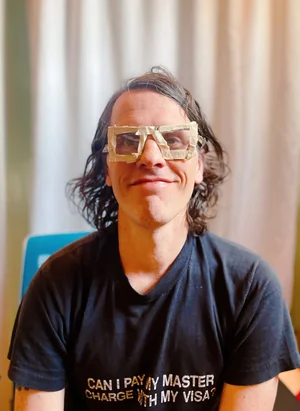
My guest today is Jacob Ward. He's a journalist and writer with a focus in science and technology. At its core, this podcast is about life outside of our comfort zones. Jake shows us that sometimes you don't have to travel very far to find the unfamiliar and unexpected, even just a few neighborhoods over.
Jacob Ward: I was the NBC News Technology Correspondent for five years. And when I started that job, it was a really specific gig. I was supposed to cover the disinformation wars and the way in which democracy is threatened and social media and the effect on your kids. But COVID derailed all of that, as it did for so many people's personal and professional lives. We were in the Bay Area where I live, one of the first communities to lock down, March thirteenth, twenty twenty. Google shut down, Facebook, as it was known at the time, shut down. And that was the clearest indication anybody had that this was a big, big problem and about to be an even bigger problem.
I remember being on the broadcast saying naively at the time, wow, this is so crazy. I gave a tour of my house and my wife and my kids and us all trying to survive a day stuck in the house quarantining. And I remember saying at the end of that broadcast, this is one day, what's it going to be like after two weeks? Little did I know, right, that we would all be locked out for more than a year.
So the effect that COVID had specifically on those of us in the news business was to really upend our beats. I went from being the kind of upbeat nerd who talks about tech problems to suddenly the regional reporter in Northern California, because we didn't want people flying if it was possible to avoid. This was pre-vaccine. So you were really trying to be as careful as you possibly could with your people. Suddenly I was being asked to cover other things. I had to go cover wildfires that year, which was a really new thing for me. You're really supposed to in California get right up against the flames. You're supposed to really get out there and show the response, show the damage, show the danger. It's television, right? If it doesn't capture the eye, then you're not going to get your point across.
Jacob Ward: That was for me an experience in really beginning to learn what it is to be one of these breaking news correspondents, which I hadn't really imagined I was going to be. People that I worked with at NBC would literally go to the airport and eat breakfast there before they even knew what they were going to be doing that day, because they knew they'd get the call and get put on a plane. And suddenly I was part of that. I was getting calls in the middle of the night, in the middle of the weekend, go right now.
With wildfires, I remember getting a call and being sent all the way to Oregon to cover them. During COVID, I leave at like four in the afternoon, get there at one in the morning, I had to take a nap for like two hours just to be able to function in a burning parking lot. I remember being parked in my car and embers are blowing across the hood as I just sleep with the recirculated air going.
My responsibilities and my kind of psychological attunement had really changed because of COVID. And all of that really came to a head when George Floyd was murdered. At the end of May 2020, the murder of George Floyd set off this national reckoning around the role of the police and racism and the legacy of slavery and all of these things suddenly coming to a head. I was immediately assigned, dispatched to cover the protests in my hometown in Oakland, California. And that experience was totally transformative for me on so many levels.
Jacob Ward: Because you enter the realm of journalism really assuming that you're going to just sort of observe at a remove, and that the professional privilege, and it is a privilege, that you are afforded in exchange for taking this crazy job is that you can observe without being truly endangered. In the old days, a journalist in the 1950s, 1960s could go and cover an armed conflict, negotiate ahead of time with the opposing forces and be more or less protected by your status as a journalist. The difficulty with covering stuff now, and this is true for all journalists right now, is that in this landscape where there is endless misinformation and disinformation, endless partisan rancor, endless conspiracy theories, it's no longer necessary to work through a journalist to get your message out. There is no longer the kind of protection that comes from wearing a press badge once upon a time. A lot of the people that I know don't even wear that stuff anymore because it makes you something of a target.
So I was suddenly put in the position of really having to see that up close. Most journalists are trained at some point in hazardous environment training. We're trained to do all kinds of stuff, and we have to renew our training on a periodic basis. You learn how to put a splint on, basic treatment of trauma injuries, you learn how to deal with tear gas and how to lie down in a certain way if someone throws a grenade into a crowd. I thought, well, I'm not going to need this. I cover tech. But suddenly I'm sent at a moment's notice out to cover the protests in Oakland.
Oakland is not a very big city. You can get across town on foot in under an hour. But traveling from one part to the other, for me, over the course of about two weeks, was a long journey because I went from covering this raw, deeply held, almost ancient anger on the part of protesters to going home each night and doing dishes and doing laundry and tucking my kids in. And I would have to take my clothes off coming home in the backyard. Because they were covered in tear gas.
Josh Caldwell: Hey, it's Josh. Hope you're enjoying the podcast. And if so, are you wanting more road stories? Well, good news. I've got you covered. Consider becoming a patron. You'll have access to loads of great bonus stories that there just wasn't time for. And you'll be supporting a truly independent podcast. Find the link in the show notes and thanks. Now back to the show.
Jacob Ward: Here's what it's like to cover one of these protests. You show up and you have a little crew. In our case, it's three or four people. Typically, it's a correspondent, a producer, a camera operator, and an audio engineer. And the four of us were dispatched to basically be on standby and to let the broadcast headquarters in New York at 30 Rock know when we had something to show. All over the nation, different teams like ours were doing that same thing. We were in what they call rolling coverage of the protests around George Floyd's death.
That coverage and that experience is very improvisational. You are walking through the crowd, and people would engage us and typically not in a hugely friendly way. You would get people coming up to you to ask where you're from, what network you're from. Some people in my job I know don't like to say because they worry about the reaction they're going to get. I'm pretty honest about it every time because I just figure our job is to be as transparent as we possibly can. I would tell people, we're from NBC News. I remember running into this one little group of protesters and them asking us who we were and what we were with. And I saw this fierce anger in them. There was a moment where they really wanted to be angry at us about what we were doing. But I managed to keep being honest with them about here's what we do, here's the standards we try to bring to it. I remember kind of gaining their trust in a way that I felt really good about.
Jacob Ward: But I also then bumped into them again later in the protest, a day later, after we'd been up very late covering the end of a day of protest. I remember being on the air live talking to Brian Williams, who was the anchor at that hour, and just kind of giving him a tour of what's going on. I said at one point, there was this phalanx of police standing there, and then this phalanx of protesters. The protesters are absolutely screaming in the faces of these police. And the police are just standing there. The anger for me there was something I wasn't really used to covering, especially not in a broadcast medium. So I didn't know exactly how to think about it, other than to say to Brian Williams, people here are so angry, it feels like they're not really going to leave until there's a confrontation, until there's a fight of some kind.
And the next day, those same protesters, that same group that I bumped into, came up to me very angry and said, you misrepresented what we were about. You said that we were there to fight. We weren't there to fight. We were there to make our voices heard. And I learned in that experience that my job is not to give my summary of what I think is going on. My job is to get them on the air to talk about their feelings about what's going on. There were some really fundamental journalistic lessons for me in that experience.
Then there was just the general danger of being in the middle of a confrontation between police and protesters. I have this tremendously talented sound engineer that I got to work with named Brian Baeta. Brian was always just sort of coming up with smart stuff before we even knew what was happening. One night we are out there, and this is during COVID, so I've got a mask on. During the broadcast, everyone's got masks on. We're in the middle of Oakland's Chinatown, walking along. Suddenly, police begin firing tear gas.
Jacob Ward: And this happens just as 30 Rock takes us. That's the phrase we use for putting us live. So suddenly I'm on live television on MSNBC being tear gassed at that moment. I lose the camera crew on the air. They disappear from my vision because I'm so discombobulated by the tear gas that's coming our way. You can hear me in the footage speaking into the microphone, but I think I basically say something like, I have lost the crew. And one of our security guys, God bless him, finds me and pulls me back into the shot out of the crowd.
From there I go on to talk about the history of protests in Oakland and how Oscar Grant, who was killed by a BART police officer, all the way back to the Black Panthers, there's a long tradition of this kind of thing. I managed to give some context and talk about the moment we're in, as people are setting fires next to me. I just wasn't prepared. I didn't have a gas mask with me, I just didn't have the equipment that I really needed.
The next day, we've all got gas masks. And Brian, God bless him, has put a microphone inside the gas mask. He has taped a little lav mic into the gas mask, and the receiver is in there too. So the seal around my face is not broken. It gave me the opportunity to be able to talk through a gas mask. We got tear gassed again that day, but the strangeness of needing to kind of keep your cool, deliver as dispassionate an analysis of what's happening as you can in the midst of all of this craziness, I learned a deep new understanding for the difficulty of that job and how important that is.
Jacob Ward: But again, that vibe of being at your house where you're trying not to get any of the tear gas on any of the home stuff around your kids as you're tucking them in, that was like two miles away from where I was being tear gassed by the police. The cognitive dissonance for me of going from covering protests over the murder of a man at the hands of the police and being in that danger, contrasted with what it is to try and be a good and functioning human with your family at the end of that day, when you get home to your kids and read them a story and look at what they made that day. I have traveled a lot for that job. I have been all over the country. In some cases I've been abroad. This is, I would say, the furthest psychologically that I have ever traveled as a journalist.
Josh Caldwell: I want to thank Jake for sharing his experience. Be sure to check out his book, The Loop: How Technology is Creating a World Without Choices and How to Fight Back. And his newsletter, The Rip Current, about big invisible forces in tech, politics, and human behavior. Subscribe at theripcurrent.com. This podcast is created and produced by me, Josh Caldwell. Music by Visual Aid, my side music project. General support and copywriting by Miranda Caldwell. And if you know someone who you think might enjoy this show, send them this episode. The support really helps. Thank you for listening, and I hope you come back next time.