Episode 8: Daryl Sabara & Chris Jordan
Daryl Sabara: I didn't really know what I was getting into. I just knew that I was gonna be in a movie and I was gonna go to another country for the first time. And I remember being like, this is insane. Like, I can't believe this is happening.
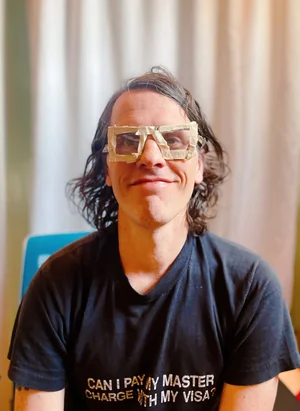
Josh Caldwell: Welcome to Atypical Daydream, a podcast about life on the road. I'm Josh, your host, and thanks for stopping by. Today we have two guests. First up is Daryl Sabara. You'll know him as Juni Cortez from the Spy Kids franchise. Daryl gives us a behind-the-scenes look at life as a young actor on the road. Then we hear from Chris Jordan, a coffee legend who has traveled to some of the most remote parts of the world in pursuit of the perfect cup. Together they explore what's gained and what's left behind on these incredible journeys.
Daryl Sabara: I grew up in the San Fernando Valley in Los Angeles. I started acting when I was really young, like five or six years old. I did a lot of commercials when I was a kid and then I got the Spy Kids thing when I was nine. I remember when I found out I got the part I was so excited. I didn't really understand the scope of what it was going to be. I just knew that I was gonna be in a movie and I was gonna go to another country for the first time. We shot in Austin, Texas, which was my first time ever being in Texas, and also in a few spots in Spain.
I remember being in Spain and just thinking this is insane. I can't believe this is happening. I was nine years old and I'm in Spain making a movie. My mom was with me the whole time. She was amazing. She was my rock throughout all of it. But I also remember feeling this strange mix of excitement and loneliness. Like you're in this incredible place and you're doing this incredible thing but you're also really far from home and you're a kid. And that's a weird thing to process when you're nine.
The thing about being a child actor on a big production is that your life is completely structured around the shoot. You go where the movie goes. You eat when you're told to eat. You sleep when you can. And you're surrounded by all these adults who are working really hard and taking everything very seriously. And as a kid you're kind of just trying to keep up and not mess anything up. I remember being really aware of not wanting to let anybody down.
And then Spy Kids 2 took us to Rome and that was another whole experience. I remember walking through Rome and just being overwhelmed by how old everything was. Like the history of it. Coming from the Valley, you know, nothing is that old. Everything is new or newish. And here I am walking around this city where everything is thousands of years old. That really hit me in a way I didn't expect.
By the time we did Spy Kids 3 I was more used to the travel and the life of it. But I also think by that point I was starting to feel the weight of having grown up a little bit on the road. Like I missed a lot of normal kid stuff. I didn't have the typical school experience. I had tutors on set. I didn't go to prom. I didn't do a lot of the things that my friends back home were doing. And I think there's a grief that comes with that that you don't really process until you're older.
But I also wouldn't trade it. I got to see the world as a kid. I got to do something that most people never get to do. And I think it shaped who I am in a really fundamental way. The road does that to you, I think. Whether you're nine or thirty-nine. It changes you.
Josh Caldwell: That was Daryl Sabara. Now we hear from Chris Jordan. Chris is a coffee professional, green buyer, and one of the most well-traveled people in the specialty coffee world. He has sourced coffee from some of the most remote and extraordinary places on earth and his stories from the road are unlike anything else.
Chris Jordan: Coffee has taken me to places I never would have gone otherwise. That's the thing about this industry that people don't always understand. It's not just about the cup. It's about the relationship between the people who grow it and the people who drink it. And to really understand that relationship you have to go to where the coffee comes from. You have to go to the farm.
I've been to Ethiopia more times than I can count. Ethiopia is the birthplace of coffee and going there for the first time was like a religious experience for me. I remember landing in Addis Ababa and just feeling this overwhelming sense of — I'm here. This is where it all started. And then you get out into the countryside and you see these wild coffee trees growing and people harvesting by hand and it's just — there's nothing like it.
But it's not easy travel. Getting to some of these farms requires days of driving on roads that barely qualify as roads. You're in a Land Cruiser and you're going through river crossings and up mountain passes and you're just hoping the vehicle holds together. And then you get there and you meet the farmers and all of that falls away. Because the hospitality is extraordinary. These people have so little in material terms but they will give you everything they have.
I was in a very remote part of Yemen a few years before the war really escalated. And Yemen is one of the most extraordinary coffee origins in the world. The coffee that comes from there is unlike anything else — these ancient varieties, these incredible flavor profiles. And the farmers there have been growing coffee for centuries. There's a real pride and a real connection to the land.
But getting there was its own adventure. Yemen was already complicated politically even before the war. And you're navigating all of that while also trying to do your job and build these relationships. I remember sitting in a farmer's home drinking qishr, which is this traditional Yemeni coffee drink made with the husks, and just thinking — this is why I do this. This moment right here. This connection.
The hardest part of this work is leaving. You build these relationships with people in these remote places and then you get on a plane and you go back to your life and they stay there. And the world is very unequal in that regard. I carry that with me. It's a weight but it's also a responsibility. To tell these stories, to make sure the people who drink the coffee understand where it comes from and who grew it.
Josh Caldwell: I want to thank Daryl and Chris for sharing their experiences. Make sure to check out Daryl's work — you can find him on Instagram. And if you want to go deeper into the world of specialty coffee and Chris Jordan's work, we'll have links in the show notes. This podcast was created and produced by me, Josh Caldwell. Music by Visual Aid, my side music project. General support and copywriting by Miranda Caldwell. If you like the show, please follow and subscribe wherever you listen to podcasts. Thank you for listening, and I hope you come back next week.