Episode 41: Rick Redick
Rick Redick: I get a phone call and they are each taking four people to Maui for a month and they asked me if I would come as one of those eight people, eight guests. Let me check my schedule, you know.
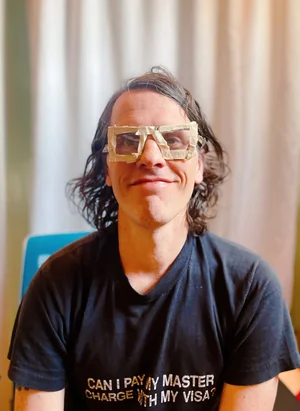
Josh Caldwell: Hello, my atypical daydreamers. Welcome to the podcast. A place where we explore what it's like when people are far from their routines and comfort zones. My guest today is Rick Redick. He's a visual effects producer, old friend, and mentor. Some people, you may know one, seem to have a kind of superpower. Their spirit, energy, their very presence lifts everyone around them. They don't just brighten a room, they somehow make other people brighter too.
Rick is one of these people. In today's story, Rick takes us back to his younger days, a time when he was searching for purpose, for peace, for a way through. His journey intersects with a legendary person whose presence had a profound impact on how Rick saw the world. And just like that person left a mark on Rick, Rick has left a mark on me, and I suspect many others.
Rick Redick: So I had been sober for like six years and I was working as a counselor. I had twice the number of hours I needed to be certified. I was working at this fancy outpatient place in Houston. Had a nice office, apartment. Everything's going well. I came home from work one day, I'm alone in the house, and I go in my roommate's bedroom and take a gun out of his bedside table. And I sit with a gun in my mouth trying to pull the trigger for like three hours. Cold sweat, shaking, couldn't do it. I had no idea I was depressed. I came home from a perfectly good day at work and put a gun in my mouth, tried to pull the trigger for three hours and couldn't. And then in my frustration I took the gun out of my mouth and blew a hole through the wall.
One of our roommates had come home. His first thought was, my god, Rick killed himself. The next day I go to this place in Arizona called Sierra Tucson to get help. I don't know what's going on. I'm scared. And it felt like if I didn't get help, I might not survive. They want to put me on Prozac. I don't want to go on Prozac. They're like, you had a gun in your mouth two days ago. They said if I take these it'll take the edge off enough so that I can function and do the work I need to do to get better. So I relented. And that place was really amazing. There were actually a lot of mental health professionals there as patients, some well-known self-help people. During that time I got to be friends with another guy.
Rick Redick: He told me that his boyfriend was going to come and that he needed to give his boyfriend an ultimatum. That if his boyfriend didn't get help, he was going to have to leave him. So we kind of together talked about what he would say. We even did a little role-play where he would say the stuff he'd written to me, and I acted like I was the boyfriend. Then the boyfriend comes. I knew that there was a lot of risk for this guy in giving an ultimatum to the boyfriend because their lives were really intertwined, and I knew that the boyfriend was some well-known person. If he said no, forget it, I'm not getting help, that would result in a huge change in this guy's life. So the boyfriend comes. It's Elton John.
Rick Redick: It's not his current boyfriend, it's his boyfriend before that. He goes in to say his piece. And Elton went and got help that day. He said yes. And that was the beginning of his new life, right? Like that we've all sort of heard about. About six months later I get a phone call. They are each taking four people to Maui for a month and they asked me if I would come as one of those eight guests. Let me check my schedule, you know. I was completely broke. I think I had fifty-three dollars to my name.
I get there and it's the Four Seasons in Maui for a month. We're kind of a little pod. We'd go to Haleakala crater at dawn. But you get kind of bored. So we're just hanging out, shooting the shit all the time. And I got to know Elton really well. One of the greatest things that happened in that friendship was Elton and I had gone to lunch and the bill came, it was like thirty-five dollars, and I insisted on paying in a way that was weird. Like there was a big flashing red light. My back was really bad and they'd all been getting massages from this guy named Michael. They're like, he's the best massage therapist in the history of the world. You have to go. And I hadn't gone, limping around with a messed up back.
And Elton was like, why haven't you gone to Michael, honey? Is it the money? And I was like, yeah. I don't feel right signing for anything. I don't get room service. I don't want you to have to pay for anything. And he got this most tender, kind look on his face and he goes, I'm spending like two hundred and fifty grand on this trip. The whole reason to have money is to create beauty in the lives of the people that you love. You're here because we love you. Go get a massage.
Rick Redick: Go to the gift shop, buy something for your mother. And it was this really beautiful lesson in my not feeling deserving and my really going out of my way to not be ungrateful and not take it for granted. But doing that to a fault, which was kind of absurd. Obviously I don't have any money. Obviously he does. And it was just this really beautiful thing.
Josh Caldwell: Hey, it's Josh. Hope you're enjoying the podcast. And if so, are you wanting more road stories? Well, good news. I've got you covered. Consider becoming a patron. You'll have access to loads of great bonus stories that there just wasn't time for. And you'll be supporting a truly independent podcast. Find the link in the show notes and thanks. Now back to the show.
Rick Redick: He stayed in touch and then he flew me over for his birthday. He was forty-four. I love London. I'm so excited to be there. Part of my near-suicide was I had broken up with this girl and I shouldn't have broken up with her. Someone I trusted as an advisory person had in a really scolding way said this whole relationship is based in fantasy. He was wrong. But I did it, and it was devastating to me and to her. She was British and had lived within blocks of where we were standing. She still had a place there in West London and we'd kind of driven by where that was. I was super sad.
When I get to Elton's, I'm trying to not be a sad, mopey, depressed person. But the mopeness comes up. I was disappointed that I got the small room all the way upstairs. Everything spiraling in this kind of I'm sad, I'm sad, I'm sad thing. I mostly just hung out in the house. Elton would be like, hey, I'm gonna go down the street to get some lunch, come with me. And I'd be like, I'm okay.
Rick Redick: My mopey sadness continued through that trip. I've always regretted not being a better hang and not being so self-obsessed. It wasn't long after that that I moved to LA with seven dollars and a free place to stay for three months, really scraping by. I finally ended up getting a job as a dishwasher and busboy. I had two hundred dollars in my old Texas checking account. There's this guy, friend of Elton's, who ran the Versace store. And so I had become friends with him too.
He was in LA. I call him at the store and I'm like, dude, could I come and cash a check? And when I got there, it's the Versace store on Rodeo Drive. I don't know what I was wearing, but it was for sure not what he was wearing. He was worried about me. I'm coming to cash a check for two hundred dollars. It might have bounced. I don't know. I've sent that guy messages on Instagram. Never heard back. Like, hey, I think I might have bounced a check to you thirty-five years ago. If so, I'd love to pay you back.
Rick Redick: Hugh and Elton had in a friendly way broken up and were still friends. And Elton had gotten together with David Furnish, who he's still with. I had finally gotten a job, and Elton and David were gonna come to LA the next morning. As a late-night person, I often call people too late. I did that to them. It was like one in the morning and they were obviously sleeping. I was like, my god, I'm so sorry. I just wanted to figure out how to get together while you're here. And he's like, no problem, I'll call you when we get there tomorrow. We're so excited to see you. I'm excited for you to meet David. And the next day, my phone got disconnected. And I've never talked to Elton since.
Like, it's a wild thing. I don't want to be the person who's like calling the office and saying, no, really, we're friends. And there were no cell phones. It's 1991. And I was like, maybe that's just what it was meant to be. It was this tiny little flash in my life, and a much tinier flash in his, obviously way more significant to me than it was to him.
In letting go when we lost touch, it felt like the appropriate thing to do. To not cling and try to stay on the periphery of his life, and to just let it be this beautiful, cool thing that happened that helped maybe both of us. I think there are ways in which I was helpful to him during that time in Hawaii especially. And certainly ways in which he was helpful to me and taught me all these lessons about my sort of sad, mopey, I'm not leaving the house, I'm just gonna sit here and be sad.
The spell of that was broken one day when I was literally reading People magazine on the couch being sad in the dark, and someone's playing the piano behind me. And it's him playing his songs. Just fiddling around, practicing, playing his songs. And I'm like, how am I such a sourpuss? And it was just this beautiful instant of ten minutes of him playing, which snapped me out of my sort of self-obsession.
Rick Redick: That brief period was a window into how to be. I mean, I don't know. He has a reputation of being a giant diva, and I think there are ways in which he's been a diva in his life. But something that's not said often enough about him is how wonderfully generous and loyal and sweet and hilarious he is. He's a really kind, great person to get to hang out with if you get a chance.
Josh Caldwell: I want to thank Rick for sharing his experience. Do you know somebody who loves Elton John? Text this episode to them. It might just brighten their day. This podcast is created and produced by me, Josh Caldwell. Music by Visual Aid, my side music project. General support and copywriting by Miranda Caldwell. Thank you for listening, and I hope you come back next time.